Game Data Pros is a remote-work company. That’s not just a description of where people work. It’s a foundational aspect of how we work together. Choosing this path for Game Data Pros offers significant advantages and raises some unique challenges we’ve grappled with. But we think a remote-first workplace provides fundamental advantages for building a team based on deep technical acumen, unique industry experience and insights, and a strong culture of cooperation and collaboration.
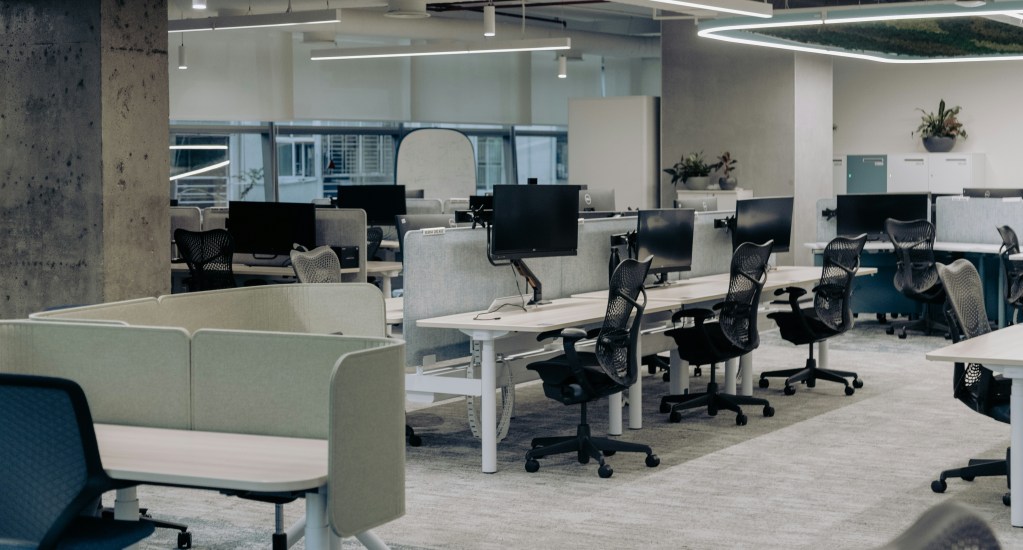
This isn’t my first virtual rodeo, so to speak. Throughout my career, I spent my fair share of commuting to and from comfortable offices, noisy cubicle farms, and oddly shaped workspaces cobbled together from bookshelves and other cast-off furniture that would probably get someone in trouble with a building inspector. Or worse, racking up frequent flier miles hop-scotching between comfortable offices, noisy cubicle farms, and oddly shaped workspaces all across the country.
Remote work experiments have been ongoing in one form or another for decades now, and the one thing that is clear is that you have to invest some time and energy to ensure it is successful. For most of the past twenty years, companies transitioning to remote work have been part of a massive unstructured trial-and-error process to figure out how to make remote work “work!”
I enjoyed hanging out with a lot of the people I worked with in those offices, but I don’t miss the time spent in cars and airplanes and away from my friends and family. And I think we get as much—or more—done better in the new remote-first environment.
Over the course of my career, I have had multiple children, and it was during the first year of parenthood that I asked for one day a week to work from home. This was over twenty years ago, and while I really enjoyed missing my ninety-minute commute, I acknowledge that the world was not ready for it.
Remote meetings were not yet perfect enough to replicate a full brainstorming day and conversation. Did we need to do them daily, weekly, or monthly? Could we do our strategy sessions remotely? Certainly, as demonstrated by the progression from Polycom phones to Skype-enabled televisions to Zoom on everyone’s desktop, the technology was always improving for us to share ideas and solve problems remotely.
We can fast forward ten years and find that the world was still largely the same. I was managing teams in multiple locations. The ugly triangular Polycom phone still enabled crucial conversations because it was too easy to dismiss the humanity of someone you could only hear through a tiny speaker sitting in the middle of the table. When confronted with this challenge, I solved the problem by registering a pair of Skype accounts, one for California and one for Texas, and connecting two conference rooms visually to help bring some humanity to team interactions. The emotional arguments and disdain decreased with the amount of people seeing each other in the middle of these conversations.
In this post, I’ll share some of my thoughts about the pros and cons of remote-first workplaces. I want to tell this story because the global COVID pandemic lockdown did not create the remote-first world. It accelerated the acceptance of the inevitability of remote work.
What We (Might) Lose When We Lose the Office
For many roles, remote work is here to stay. If we weren’t already working remotely with success, the pandemic lockdowns demonstrated that most knowledge worker-type work—including software development—can be done effectively by completely remote teams. But plenty of people still argue for the value of in-office work. So, let’s start by examining what we lose with remote work.

In-person work is said to strengthen workplace culture and employee connections. The most common claim is that you lose “watercooler moments.” Remote work, while offering flexibility, has been associated with increased feelings of isolation and disconnection among employees. A recent study on company loyalty showed significant value in people developing friendships at work.
Riffing on those watercooler moments, advocates for returning to in-office work have argued that physical presence fosters better collaboration and innovation. As conversations weave in and out of work subjects, you are subject to moments of spontaneous ideation, where an “aha!” moment will arise out of the conversation, spurred on by the real-time discussion with your peers. In-person interactions can lead to spontaneous idea generation and problem-solving. The “cluster effect,” where people in a shared physical space can build on each other’s ideas more effectively, is often cited as a benefit of in-office work.
Finally, proponents of in-person work emphasize the importance of clear work-life boundaries, which can be blurred when working from home. The office environment offers a distinct separation between work and personal life, but this may also simply lead to longer hours worked rather than measurable increases in productivity.
One could also posit that these arguments are tailored to benefit commercial real estate owners, office furniture vendors, and “seats in seats”-style management.
Pandemic lockdowns created a unique experimental environment. Researchers have studied the correlation between decreased moments of spontaneity and the number of team members working remotely. The coming years will reveal more about what was really lost here. Several research papers with initial post-lockdown analysis have been published through the NIH, including Remote Working and Work Effectiveness: A Leader Perspective and Investigating the Role of Remote Working on Employees’ Performance and Well-Being: An Evidence-Based Systematic Review.
What We Gain When We Choose Remote Work
Some Game Data Pros team members had been working mostly or entirely remotely for years before the pandemic lockdowns, and the lockdowns simply demonstrated to a wider demographic that not only can teams continue their work remotely, but they can also grow and thrive in a remote-only environment.
So, what do we gain with remote work?
The biggest thing we gain is time, primarily from losing a commute. That may mean gaining back anywhere from an hour to three or more hours in some areas a day, and that adds up. Individual employees get back between 20 and 60 hours per month or more. That time is irreplaceable, and when companies acknowledge the value of people’s time by allowing for remote work, you are giving them the freedom to contribute their best thinking and attention to solving problems and creating value.
We also gain control over our schedules. This is especially valuable for people with families and pets. Doing kid drop-offs and pickups is a huge quality-of-life feature for a parent, and if you have pets, the need to walk your animals before it is dark out is a beautiful perk. Probably healthy, too.
Remote workers have more freedom and flexibility to schedule other appointments and family commitments. Flexible schedules benefit the team’s quality of life, including being more involved with your kid’s activities such as after-school enrichment classes, community programs such as scouting, and athletic activities–including having the opportunity to coach or mentor. As a parent of a young athlete, I cannot emphasize enough how valuable this is.

It’s still difficult to quantify the value of well-rested colleagues who have the flexibility to both be productive and take care of themselves and their loved ones. Anecdotally, having healthier people who think more profoundly about the long term makes for a better, more productive company.
Another benefit of a remote-only team is the ability to work from almost anywhere with an internet connection. Team members can choose where they live—or travel. Location flexibility also means the company can recruit the best people from anywhere in the world rather than competing with every other company within a geographical monoculture. Instead of “we commute from South Bay vs East Bay,” the Game Data Pros team lives in 14 states and two different provinces in Canada!
There is more room to accommodate part-time or flexible schedules. We’re able to accommodate almost-full-time schedules. For example, we have valuable team members who can only work 30 hours a week due to other commitments. That’s a lot harder for the employee if they’re driving to the office, but remote work makes it almost seamless. The company also benefits from this by keeping someone with valuable skills and experience on the team.
The final benefit of remote work is for the company itself: the company is operating rent-free! Depending on where you live, the cost of office real estate can be quite exorbitant.
Solving the Challenges of Remote Work Creates Strong Teams
Game Data Pros has been a remote-only team from day one. We’d like to think a lot of our success is built on that foundation—hiring the best people around the world and giving them the flexibility to create wins for the company and our customers from the comforts of their home offices (or the kitchen table, or a sofa, or the backyard on a particularly nice day…).
One of our goals is to make sure that we are an excellent company based on the best teammates. By not limiting ourselves to one or a small number of fixed geographies, we reasoned that remote work would help us attract top-tier talent wherever it exists.
First, we agree with Peter Drucker that “culture eats strategy for breakfast.” We chose to prioritize our culture and reinforce it at every opportunity. That’s why the primary pillar on which we build Game Data Pros is the “No Asshole Rule,” popularized by Robert I. Sutton in his book The No Asshole Rule: Building a Civilized Workplace and Surviving One That Isn’t. We explicitly interview to avoid individuals who consistently engage in toxic, demeaning, or destructive behavior toward others.
In offices where you have body language and nuances, it’s easier to realize the other person isn’t really an asshole. Remote? The bar is higher, and centering policies and a culture that discourages this kind of behavior from arising, focusing instead on communication, collaboration, and compassion in the first place, is key.
Another of our many key cultural pillars is that we wish to enable people to do excellent work and become experts in what we do as a business. We explicitly dedicate multiple windows of time every week to allow people to share and learn. We have weekly knowledge transfer meetings where subject matter experts discuss their expertise and explain elements of our products and our services to help enlighten everyone. There are also monthly brown bags that are more tactical and focused on expert subjects within teams. We estimate that the typical Game Data Pros employee spends 5 to 10 hours a week getting better at their craft.
Most of these meetings are also recorded and available for people to watch, and the presentation materials are stored alongside the recordings for people to review at their leisure. This includes product demonstrations, discussions about best practices, and deep dives into expert-level subjects related to pricing and pricing implementation in the mobile and console games ecosystems.
Socially, we started with an hourly company coffee meeting to help reinforce building social relationships within and between teams. This evolved into a monthly game day where we spend an hour playing games like Codenames, Gartic Phone, virtual escape rooms, role-playing games, or similar experiences in groups of four to sixteen people. The idea to do this came from the team, which is awesome!
(By the way, for the game designers out there looking for a unique idea: there is a shortage of great team entertainment experiences for groups of twenty-plus people to play in just a browser. We are constantly experimenting with new ways to have fun together and have been surprised by the lack of compelling offerings. If you have a group game you’d like us to try, reach out!)

Early on, we made the migration to Outlook for email. We discovered that the most important element of our mail client was calendaring meetings, and Outlook is hard to beat for that. We made a massive effort to move our mail to Outlook and changed our entire productivity suite to support seamless calendaring!
We also use Slack extensively for communication and collaboration. We added a #goodmorning channel to our Slack where we start the day with a polite (optional!) good morning greeting to the rest of the team!
Working remotely, it’s harder to give your colleague a high five to celebrate their wins. We added a plugin called “HeyTaco”, recommended by one of our team members, to Slack. This is a virtual leaderboard where you award people with Tacos for their accomplishments. HeyTaco gives you the means to create a finite number of moments of gratitude and recognition for the people you work with daily.
We have a #9-1-1 channel for troubleshooting problems, and we have adopted the practice of impromptu Zoom meetings to collaborate in real time when significant issues require attention.
In addition to all of these wonderful things we do to encourage connectedness at work, we also have some habits we encourage to help respect each other’s time.
Since we are spread across North America, we have “core hours.” We have a window of time that is friendly to people on the East Coast and the West Coast, during which we can schedule meetings. This gives East Coast people some early morning hours and West Coast folks some afternoon hours to do work largely uninterrupted. We have also declared one day a week a “no meeting” day for individual contributors. These boundaries around meeting times let our teams get stuff done without distractions. We find this is particularly helpful for the engineering teams, which benefit from extended time to find their Flow.
We have recommended that people mark off some time on their calendars as “do not book” to prevent people from working without taking any breaks in the day. It is important to get fed and step away from the computer!
Team members have also suggested additional things we do for fun. We have now established three remote offsites, including watch parties for movies and documentaries. These have proven surprisingly successful, especially with a food budget and some charming schwag. Most recently, we have started opening a daily huddle in Slack for people to join in, intending to simulate the “water cooler.” It is still early days on this one, and we will see how it evolves.
The final thoughtful thing that we do is that while it is nice to encourage people to have their cameras on in meetings, we are a “camera optional” culture. If you attend every meeting with your camera on all day, you will invite Zoom fatigue. Some people have a greater tolerance for camera activity than others, and for the people who do not want to put their face out there, you can turn it off if you need to.
Not all of our ideas came from within the team; we also borrowed some inspiration from other people who have shared successes in remote cultures, such as Super Evil Megacorp’s 10 Learnings for Building All-Remote Cultures.
As I mentioned earlier, there’s quite a bit of research still to be done on remote versus in-office work, but some of the research confirms that we’re on the right track. Harvard Business Review, in the article Research: Knowledge Workers Are More Productive from Home, reports findings that knowledge workers are 13% more productive when working from home compared to in-office settings. Employees reported better work-life balance and higher job satisfaction when working from home, though productivity gains depend on both self-discipline and effective management.
Continuous Improvement in a Remote-First World
Transitioning from an office-first to a remote-first workplace involves many changes, and each one brings both challenges and opportunities. By prioritizing tools, processes, and, most importantly, a culture that supports excellence and continuous learning, we’ve been able to adapt and thrive in this remote-first environment. Feedback remains an important cornerstone of our continuing growth as a remote team, ensuring that our practices are effective and also inclusive, and empowering for everyone involved.
I hope this article provided valuable insights into how we make our remote-first workplace dynamic, engaging… and really productive! The journey doesn’t end here. Remote work practices are continually evolving, and staying ahead of the curve is important. If you’re interested in learning more about optimizing remote work strategies or if you’re looking for expert advice on maximizing revenue in the game and digital entertainment markets, we encourage you to reach out to Game Data Pros. Contact us today to learn how we can support your success.

 John Szeder