The beauty of creating your own tools is figuring out the significant pieces of information you need to make important decisions and bringing that to decision-makers as quickly and succinctly as possible. – Find out More!
Introduction
Over the past ten years, I have stated that good teams build products, and great teams build tools. Enough people have given me blank stares that this is not an obvious statement. The tools a team uses can make or break their ability to innovate, streamline processes, and ultimately achieve success. In the ever-evolving landscape of software, when given a choice between building custom software tools and using off-the-shelf solutions, I have nearly always chosen to build custom software tools.
Let’s talk about why!
The Value of Custom Software Tools
Custom software tools, tailored to meet specific needs and objectives, offer a range of compelling advantages. They enable teams to harness the full potential of their organization in a variety of ways:
- Efficient Processes
- Ownership of User Experience
- Enhanced Integration
- Compliance and Regulation
- Innovation Catalyst
Efficient Processes
“Perfection is achieved, not when there is nothing more to add, but when there is nothing left to take away.”
–Antoine de Saint-Exupéry
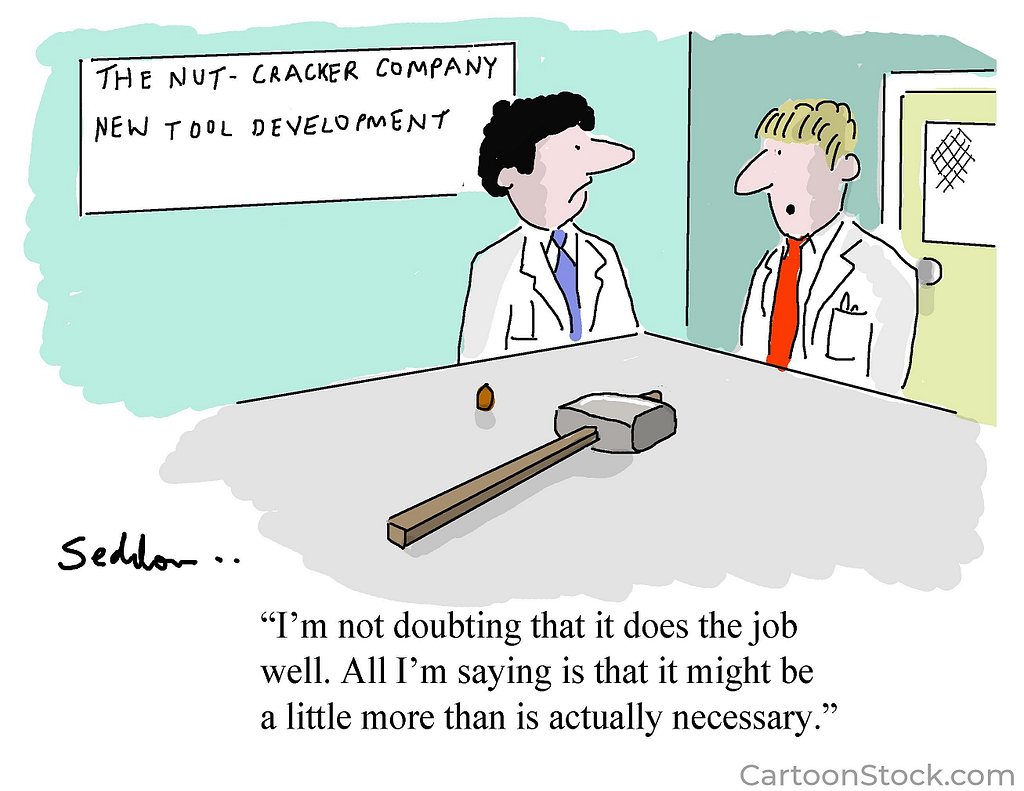
The beauty of creating your own tools is figuring out the significant pieces of information you need to make important decisions and bringing that to decision-makers as quickly and succinctly as possible. Given the complexity of business decisions today, ensuring you see the correct information is crucial. In entertainment software, there is so much data available it is easy to get lost in it and drown in the vast ocean of noise. You have the ability to provide relevant data to users for them to be successful, and it is easy to overload people with too much information and distract them. In off-the-shelf tools, you may not be able to simplify your workflows and remove noisy information. Similarly, you might find that the workflows that apply to a generic customer might not apply to your organization, and wasting pixels and clicks will slow down your team’s success.
Optimizing information and reducing clicks will make your teams faster and better in the long run.

Ownership of User Experience
Related to the last point, when you build custom software, you often find that what you thought you needed to build and what you actually built might not be the most optimal in the long term. By creating custom software tools, you have much more control over making changes to the information available and executing a “Shrink-to-fit” optimization on your tools. If you are using off-the-shelf software, this might present a challenge because you do not have as high a degree of control in making changes to your tools, and even if you do, it is also likely that this will require specialized knowledge if it is even possible.
One of the benefits to building your own platform includes the ability to define roles and assign users to them. For example, if you were making your own A/B testing framework, this means that you can build specialized views for different categories of users. One group might only need to review a read-only display of currently running experiments. A different group might benefit from its own view that can create, modify, or retire those experiments. As the feature set for your tools increases over time, managing your interface’s complexity and ensuring that you give each user category its own streamlined workflow is often difficult, if not impossible, in off-the-shelf software.
This gets even more interesting over time because as your software users become more successful, more people will want to have their own ability to benefit from these tools. Eventually, product managers, QA teams, data scientists, and even account managers will want to have their own access. Ensure your teams can get in, get the correct information they need, take the right actions, and get out with the best results.
Enhanced Integration
Another beautiful reason to write your own custom tools is to create enhanced integrations with your organization’s other tools. Whether it is providing custom alerts and messages to Slack channels (known as SlackOps) or exporting data to preferred data visualization platforms to make dashboards and graphs for stakeholders, not every off-the-shelf package has all those features. One really important feature to add to your custom software is providing authentication using your company’s existing authentication solution. This is helpful in user and role management, as mentioned previously, and also helps ensure your tools and processes comply with your company’s security requirements.
Compliance and Regulation
We recently shared a great post from our very own compliance executive Greg Doane, on the importance of compliance to software companies. This is also a crucial reason to have robust control over your own tools. New regulations around data privacy are arriving nearly every day, and how you interact with customers and PII (Personal Identifiable Information) might put you in violation of laws and regulations that will have costly fines or require significant amounts of rework to make sure you are handling sensitive data correctly. Relying on a third-party, off-the-shelf solution might make this a harder problem to solve in a timely and cost-effective manner.
Innovation Catalyst
The final and most important reason for creating my own tools is that it spurs innovation. Whenever your teams use tools and find ways to make their day-to-day tasks more efficient, it helps to free up time for lateral thinking. By adapting your custom tools and updating them based on what you learn on the job, your teams can more easily enter a state of Flow and get their work done quickly. The less time you burn cognitive energy just trying to get things to work or grinding through superfluous clicks, the more time you have to think about the bigger picture. Users will have brilliant ideas that can help shape the future of your current tools and inspire your tool teams to solve additional problems.
Summary
In summary, while off-the-shelf tools certainly have their place in the software landscape, great teams recognize the distinct advantages of building custom software tools tailored to their unique needs. These tools are more than just assets; they become integral components of a team’s success, enabling them to innovate, adapt, and excel in their respective domains. Custom software tools are not a luxury but an investment in the future that can pay dividends in terms of efficiency, competitiveness, and overall excellence. Ultimately, the decision to build custom tools versus opting for off-the-shelf solutions is a strategic choice that can define the trajectory of a team and organization, setting them on a path toward greatness.

 John Szeder