Seven Things That Are Absolutely Going To Happen in 2026
Dec 05 2025 . 13min read
One of the more unique attributes of the video game industry is the extent to which people make year-end predictions. Every December, hundreds, if not thousands, of articles are published with predictions for the coming year; something that simply does not happen in consumer packaged goods, for example (nobody’s out here publishing “10 wild predictions about laundry detergent in 2026”).
Gaming is also an unusually volatile industry. Things change constantly. As a result, many of the predictions are wrong. Nobody looks like a prophet one year later, and many major industry events simply were not on anyone’s list. This last point is particularly interesting — we looked and couldn’t find a single set of predictions for 2025 that included the recent partnership between Unity and Unreal (which is arguably one of the five most important events to happen in gaming in 2025).
Unity and Epic Games today announced they are working together to bring Unity games into Fortnite, creating more opportunity and value for players and developers. Developers will have the ability to publish Unity games into Fortnite, one of the world’s largest gaming ecosystems with more than 500 million registered accounts worldwide, and participate in the Fortnite Creator Economy.
Our 2025 predictions, made in late 2024, are also a great example of this. While six of the seven predictions we made were correct, we missed three huge trends (two of which were directly in our field of expertise). So, maybe we get a 60% correct score (which, given industry volatility, feels like a solid B+).
This industry-wide habit of predicting the future is a good thing. How do you model the future in a highly volatile industry? The best way is to have lots of people make lots of predictions (ideally, as independently as possible), and then look for patterns and themes. In practice, the gaming industry has stumbled into a superforecasting-style yearly tournament. As the people from D-Lab put it:
While many domains still rely heavily on the opinions of credentialed experts – pundits, analysts, and consultants – an alternative solution has gained traction: crowdsourcing the predictions and then aggregating the collective wisdom. Scholars of collective intelligence have long posited that the aggregation of diverse, independent opinions can often outperform even the most sophisticated and knowledgeable individual experts, particularly in highly uncertain domains. Moreover, the fallacy and biases of expertise have become increasingly apparent across a wide range of fields.
In keeping with our recent tradition, we are also going to include instant reactions from ChatGPT personas (in this case, we asked ChatGPT to assume the personas of a CEO of a mid-sized gaming company and an industry pundit knowledgeable in the specific prediction area).
Our (AI) Expert Panel, Debating Furiously
And now, without any further ado… here are seven things that are really, absolutely, 100%, beyond a shadow of a doubt going to happen in 2026.
We’re leaning into that 3.2% number for 2024 (and the associated 3.4% for 2025). While the headcount reductions will continue, revenue will continue to climb. And while there is substantial skepticism around Owen Mahoney’s prediction that game industry revenue will triple in the next 5 to 7 years, the smart money is on the rate of revenue growth increasing as well. It might be too much to expect double-digit revenue growth, but we think Mahoney is directionally correct and that 7% to 10% seems likely.
(update Dec 21: The ‘final’ numbers for 2025 are starting to come in and 2025 actually grew at 7.5% according to NewZoo. If anything, this emphasizes that we are switching into a bull market in 2027 and beyond)
At the same time, under the hood, expensive senior staff have been laid off, mid‑career folks are being inexorably squeezed, and much of the “missing” capacity is being replaced by AI tools, outsourcing networks, and a more flexible contractor/remote workforce. This looks like a stable equilibrium where investors get the margin expansion they want, players keep getting content, and the labor market continues to shrink.
Our expert panel was in complete agreement:
CEO. This is pretty much what I’m planning for. Our board wants us to show operating leverage: flat or slightly lower headcount while revenue grows. The 2025 data is already clear— industry layoffs in the tens of thousands, but market forecasts are back in growth mode. So in 2026 I have to assume capital markets will reward lean teams that adopt AI, automation, and external partners rather than rebuilding the 2021 org chart.
The upshot: in 2026, “mobile games veteran” on a LinkedIn profile will be a strong signal for senior roles in growth for almost any consumer application (this also combines nicely with prediction #7’s continued workforce contraction in gaming).
Here’s how our expert panel sees it:
CEO. This one is already biting us. I’m losing UA and growth PMs to non‑gaming apps that offer better comp, fewer content fires, and less hit‑driven risk. I’m running lean and these losses hurt. The Deconstructor of Fun article on Duolingo, DraftKings, and Tinder really underlines how aggressively these adjacent verticals are pulling from the game design and UA toolkit.
Pundit. The prediction is directionally right, but I’d widen it. It’s not just staffing migration; it’s strategy migration. Engagement mechanics from mobile games are showing up in top non‑gaming apps, and the people driving those efforts are often ex‑games PMs and UA leads.
5. Mobile Ads Will Continue to Get Weirder
Let’s be clear: when you compare mobile game advertising in 2025 to mobile game advertising in 2020 (or even to mobile game advertising in 2024), the rate of change is astonishing. Playable ads and mini‑games have become standard tools for serious UA teams and the creative envelope keeps being pushed by AI‑generated actors, deepfake‑style influencer clones, interactive AR lenses, and boundary‑pushing “shock” concepts. Things are already pretty weird.
Moreover, current data shows a strong performance advantage for interactive/playable formats and the continued arms race in creative volume; at the same time, regulators are reacting to deceptive or offensive ads, as in the UK ASA’s crackdown on sexualized mobile ads. At this point, the best mobile ads are more like a short piece of interactive entertainment—or uncanny AI spectacle—than a traditional banner ad or static video. Half the time, players remember the ad better than the game it’s selling (which is both impressive and slightly terrifying).
To understand what’s going to happen in 2026, let’s briefly review what Meta has been doing in 2024 and 2025:
Meta has already rolled out tools that let advertisers feed in a few basic ingredients—like a product image, brand assets, and a short text prompt—and then the system automatically creates multiple ad variations using AI. These variants are then tested in real time across placements and Meta’s Advantage + system automatically prioritizes the formats and creatives that perform best.
Meta is also gradually removing advertisers’ ability to manually tune targeting (whether by specifying demographic criteria or by managing exclusions). The vision is clear: instead of an advertiser manually picking narrow audiences based on demographic criteria, the advertiser will feed Meta signals (creative variations, objectives, first‑party data, product catalogs, conversion events, and measures of the user’s value), and Meta systems will automatically slice users into countless “micro‑segments” on the fly, constantly shifting budget toward the most responsive micro-segments.
The prediction that Meta will engage in cross-advertiser learning for both content generation and targeting. We don’t know how much they’re doing this today, but it is inevitable (and it seems like an inevitable consequence of GEM, their new “Foundation Model for Ads”). They won’t share the semantic models with their advertisers, but they will build them.
The prediction that the combination of having the cost of creative generation go to zero, the ability to understand and target creative to micro-segments, and the ability to learn targeting across all the advertisers will lead to a feedback loop that will create and reward highly differentiated content as long as it appeals to users.
The claim that the other advertising networks (especially the SRNs) are not far behind and will also roll out similar tools.
The net effect will be an avalanche of unusual, obscure, and creative ads. In many, if not most, cases the ad will be more interesting than the games.
Our expert panel thought long and hard about this one:
4. GTA-6 Will Ship and the LiveOps Backlash Will End
The prediction here isn’t just “GTA-6 actually makes its latest launch deadline” (though this prediction will be wrong if that doesn’t happen).
Given GTA history and Take‑Two’s massive expectations, GTA-6 is almost guaranteed to lean on long‑tail monetization. Rockstar will thread the needle with a strong core game, cosmetic‑heavy monetization, and a steady cadence of content that will once again prove that Live Services, done well, are key to both building a long-term community and effective monetization (note that if you’re reading this and trying to figure out whether to invest in Take Two, we strongly suggest reading Joost Van Dreunen’s take on the situation).
And this will finally normalize large‑scale live operations for premium games in a way players accept. After several years of backlash (see also: here and here) against poorly executed live‑service titles— roadmaps scrapped, servers shut down, exploitative monetization—GTA-6 will arrive as a $70+ box product with a robust single‑player experience and an evolving online/live‑ops layer that actually delivers value.
Here’s how our expert panel reacted to this prediction:
CEO. If Rockstar pulls this off, it will help executives like me argue that ‘live ops’ isn’t inherently evil—it’s just usually done badly. Right now, I look at consumer sentiment and developer surveys and see real fatigue: developers saying they don’t want to make their next project live service, and articles cataloguing the ‘life and death’ of shut‑down games.
Pundit. The delay to November 2026 actually strengthens the logic of this prediction. Take‑Two is clearly optimizing for quality and long‑term impact. Meanwhile, live‑service fatigue is very real in 2025. You can see it in opinion pieces warning of burnout and monetization pressure, and in the number of live‑service games quietly shutting down.
3. Apple Will Drop the Standard Rate to 15% for Everyone. Google will be a Fast Follower
Apple’s original policy for processing payments was simple: applications distributed through Apple’s App Store were required to use Apple to process any in-app transactions involving digital goods. And Apple took 30% of every transaction (a policy that was modelled on Facebook Credits)
For the past 10 years, Apple has been under extraordinary pressure to allow developers to use alternative payment systems (e.g. not use Apple to process transactions).
In the EU, Apple was found to violate the Digital Markets Act (EU, Apple, Brookings). Note that the EU also opened “additional non-compliance investigation(s).”
In the United States, the resolution of the various lawsuits has opened up a landgrab for alternative payment systems.
As a result of these changes, Apple has been slowly losing market share. Publishers, rightly, see the opportunity to move from a 30% fee to a 5% fee (Naavik estimates 3 to 4%) as extraordinarily compelling. Apple hasn’t moved quickly because of the enormous volume of purchases made through Apple’s App Store— lowering 30% to 15% is significant, even to Apple. Their long-term choice is clear: either lower the overall rate from 30% to a more competitive number or see most transactions move off their platform.
Note also that Apple has already been lowering their rate for very specific carveouts. Here’s a snapshot of their current policy:
This prediction is simply that, in the face of ongoing pressure, declining market share, and increasing payments policy complexity, Apple moves to a universal 15% fee in 2026. And, of course, once they do so, Google will follow quickly.
Our expert panel wasn’t surprised, but was surprisingly cool to this prediction:
CEO. As a CEO running a portfolio of F2P and hybrid-casual titles, a universal 15% is… nice, but not life-changing. It’s a few extra points of margin, which matters at scale, but it doesn’t fundamentally change how hard it is to build a profitable game in 2026.
Pundit. Dropping to a flat 15% for everyone is less a revolution and more the end of a very long, very public negotiation between Apple, regulators, and the ecosystem. For years, the real story has been erosion of the 30% norm: carve-outs for small devs, sweetheart deals for big media partners, regional compliance hacks after the DMA, and mounting legal pressure in the US and EU.
2. Elon Musk Will Begin to Talk Extensively about the Neuralink as the Ultimate Gaming Platform
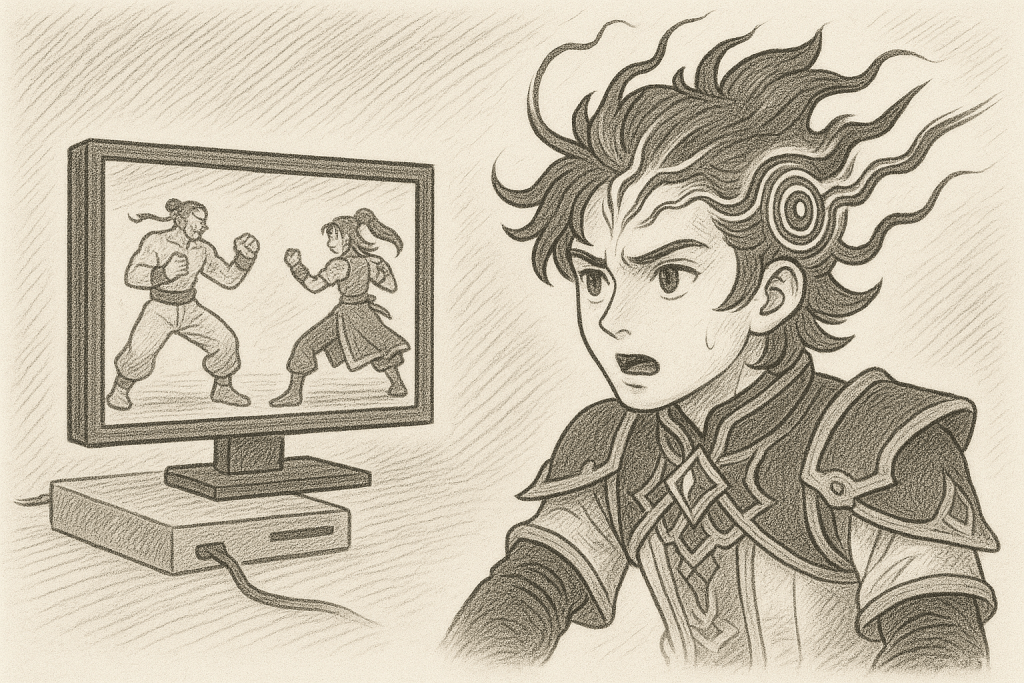
Neural Control of a Fighting Game (Where Reaction Time Really Matters)
Our prediction is simply that this conversation hits the mainstream, shepherded by Elon, in the second half of 2026.
After they finished snorting coffee through their noses (and then wiping up the mess; our expert panel seems to be composed of neat-freaks), our expert panel reacted to this prediction:
Pundit. This wasn’t on my radar. But you’re right. In 2026, ‘ultimate gaming platform’ will mostly be rhetoric and early lab demos. But the idea will be in the cultural water, which matters a lot for how investors and big platforms think about the 2030s.
All this time later, the PS5 is easily my most used console, but – as a straightforward replacement for the PS4 – it’s not felt like an earth-shattering generational shift.
All of this is to say that there’s a certain amount of pressure for the PS6 to be awesome, not incremental.
So, while Sony’s historical cadence of seven‑year console cycles points to a 2027 launch window for the PS6 (the PS3 was released in 2006 and the PS4 was released in 2013), and the industry consensus is that it will ship in time for the 2027 holiday season, there are starting to be signs that it could be mid 2028 instead:
Our money is on Sony opting for a 2028 window. By doing so, Sony extends PS5/PS5 Pro’s life, lets the Project Amethyst‑style hardware mature into something mind-boggling, and aligns the PS6 with a more stable post‑GTA‑6 landscape.
Here’s how our expert panel reacted to this prediction:
CEO. This prediction tracks what I’m hearing in platform briefings and from analysts. A longer PS5/PS5 Pro cycle gives us more runway to recoup AAA budgets—but it also means another few years of intense competition for store placement and subscription visibility on current‑gen hardware. I’m not loving my console business right now.
Pundit. Sony hasn’t given a date for the PS6 yet, but the breadcrumbs are there. TechRadar, GamesRadar, Tom’s Guide, and a slew of rumor coverage all converge on a 2027–2028 window, with many insiders leaning 2028.
Extra Bonus Observation: 2028 Will Be the Beginning of the Next Video Game Boom
These last two predictions, that the Neuralink will eventually become a gaming platform and that the PS6 will be released in 2028 (with amazing hardware features), can really be combined together, along with the continued growth of VR and AR gaming and the rumored 2028 Xbox release, to predict that “2028 will be the year when the platform shifts really happen.”
When you combine that with the emerging world of weird ads and micro-targeting, the increased maturity of AI toolchains, and the coming enormous revenue expansion predicted by Owen Mahoney, it feels like 2028 is going to be the start of a sustained boom period for video games.